 my.CSMD
CSM Hosts Horseshoe Crab Tagging Events to Advance Research in Calvert County
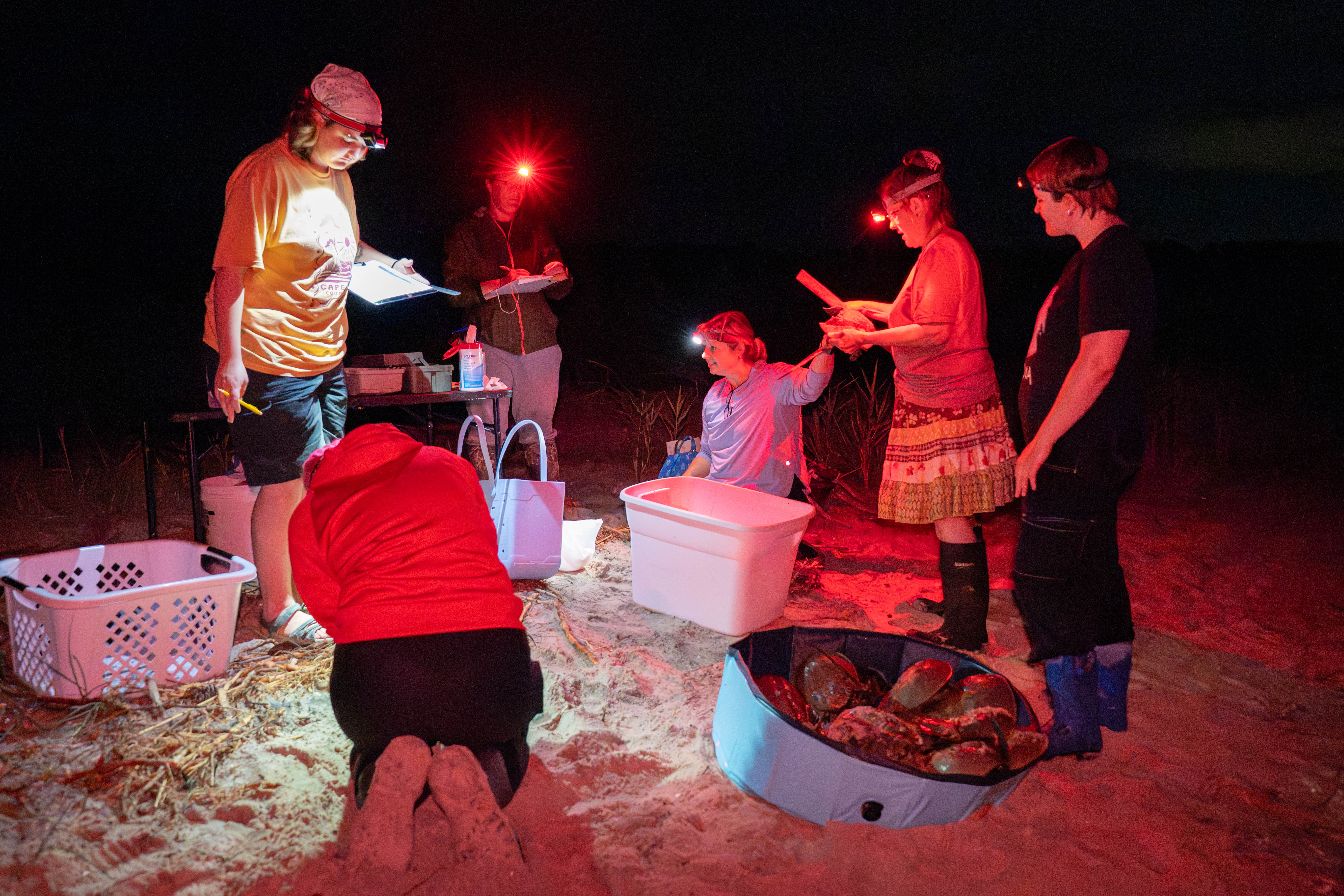
Each summer, horseshoe crabs gather on Chesapeake Bay beaches under the light of the full moon to lay their eggs. While these ancient animals have survived for hundreds of millions of years, researchers continue to study their movements and population. At the College of Southern Maryland (CSM), Professor Dr. Tracey Stuller is giving students the opportunity to contribute to this important research.
“During the spawning season, approximately mid-May through early July, we’ve started coming to local beaches to tag horseshoe crabs,” Stuller said. “The tags are part of the U.S. Fish and Wildlife’s Service’s Cooperative Horseshoe Crab Tagging Program and help track where they’re going and learn more about the scope of the local population.”
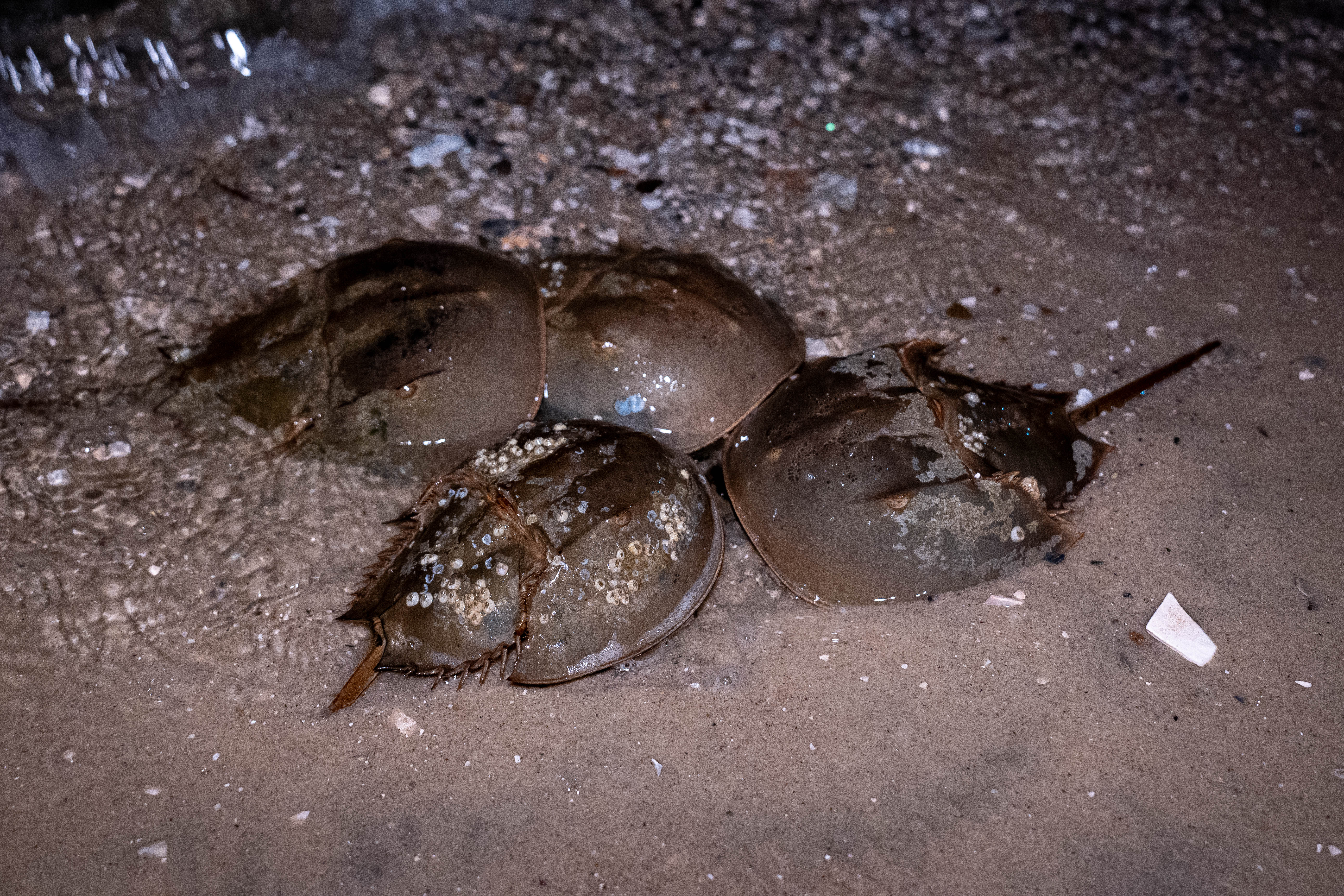 Since 2023, Stuller has been leading student volunteer trips to Cape May, New Jersey, where students participate in horseshoe crab tagging. While the Delaware Bay is considered the epicenter of horseshoe crab spawning, Southern Maryland's Chesapeake Bay shoreline also supports an important breeding population. Inspired by what they learned in Cape May, Stuller and her students launched a local tagging effort to apply those techniques closer to home. The goal is to contribute valuable data that will help researchers better understand horseshoe crab populations and movements within the Chesapeake Bay.
“Many of our volunteers don’t know much about horseshoe crabs, and hosting these events closer to home gives them an opportunity to learn about them and grow an appreciation for our regional ecosystem,” Stuller said. “For CSM students, these interactive experiences are an important part of bringing their education into the real world, or even for sparking an interest in something they may not have known they had.”
This spring, Hannah Aud, CSM student studying human services, traveled with the college on its annual trip to Cape May. Since then, she has participated in several events in Calvert County. “I wanted to have a new experience, and I just really fell in love with doing it,” Aud said. “It made me more aware of horseshoe crabs and what interesting creatures they are. It sparked something in me that I wanted to learn more about and do my part. The events filled me with a purpose that I could be a part of helping these creatures.”
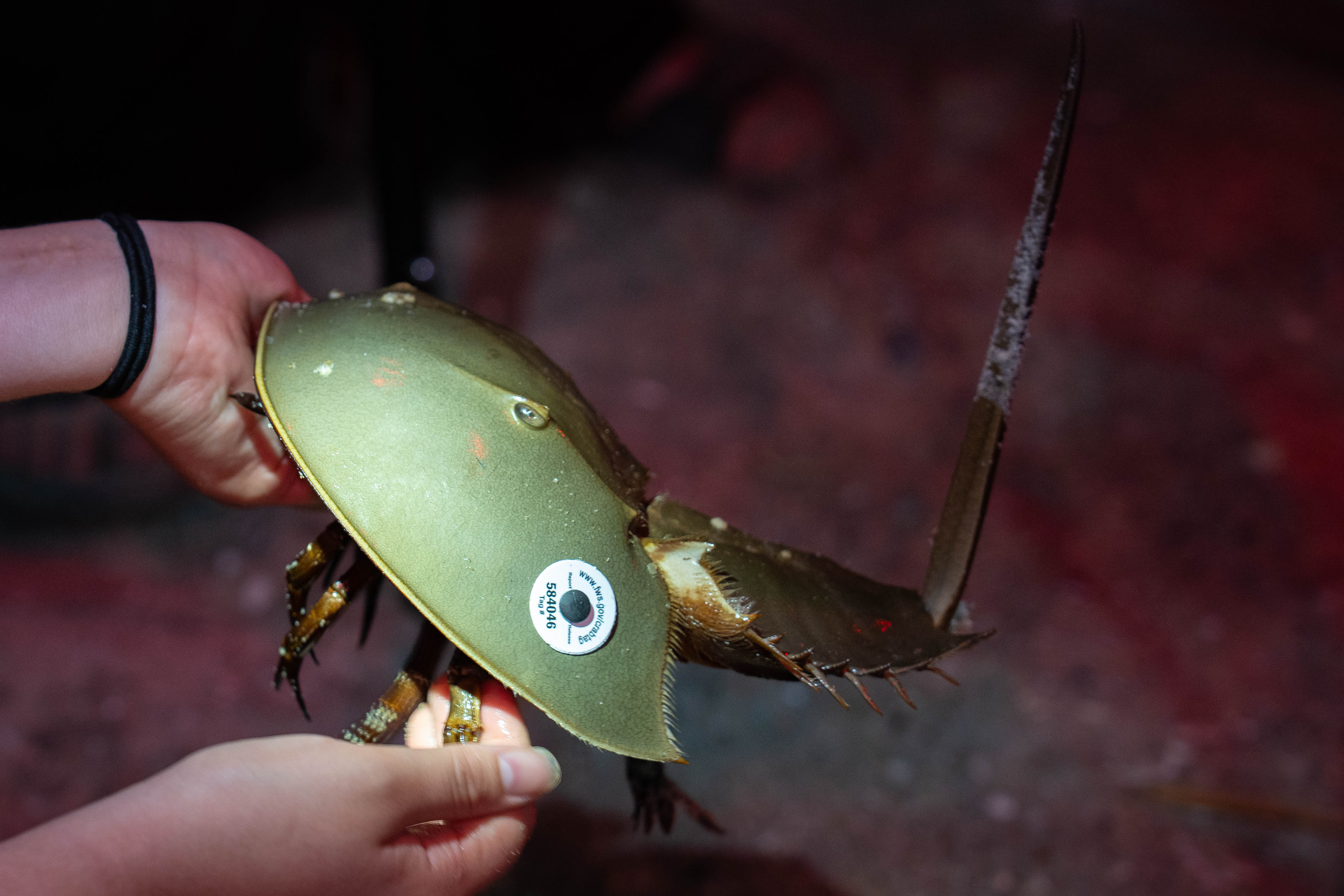 During tagging events, participants walk along the shoreline searching for horseshoe crabs and their eggs. Event leaders share information for volunteers to learn more about the species’ biology, anatomy, and history to the region, before recording data like size and gender. Volunteers then make a small hole in the side of the shell to hold in the tag, which are small white discs with a unique serial number, before releasing the crabs back into the water.
Kloie Austin, environmental science student at CSM, has found a new passion for horseshoe crabs through volunteering with the tagging events.
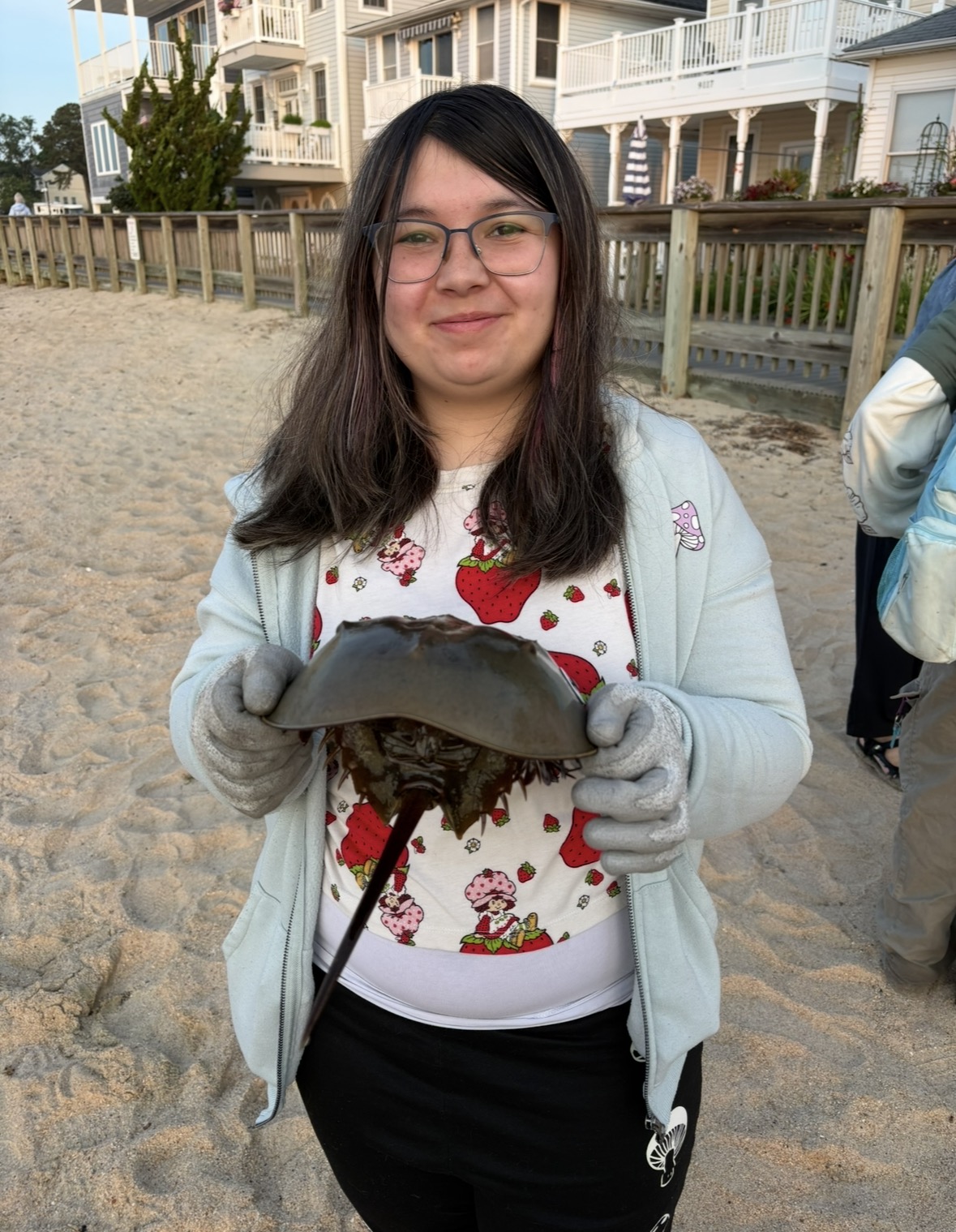 “I’m learning more each time, it’s really eye opening,” Austin said. “So many people think they look scary, even though they are so helpful for our environment. I want to do my part in conserving the bay and helping our ecosystem in Maryland.”
The research gathered at tagging events extends beyond horseshoe crabs. It can also help us learn more about local bird populations. Their eggs are a critical food source for migrating shore birds, making a healthy crab population an essential part of the regional ecosystem. Monitoring the population of horseshoe crabs can help researchers better understand whether there is enough food to fuel the birds’ migration, and how changes in that food source may impact bird populations or migratory patterns.
CSM is recognized as a “bird campus” by the Maryland Bird Conservation Partnership for its commitment to protecting local bird populations and conservation efforts, part of which includes the horseshoe crab tagging. Austin said she is proud to attend a college with this designation.
“It’s important to offer these opportunities to students for the hands-on learning exercises, and to form a sense of belonging to their environment,” Austin said. “Actually holding a horseshoe crab makes you feel like you’re doing something to help.”
Austin is planning to use her environmental science degree to focus on animal science and conservation. The events in Calvert County were her first experience with horseshoe crab tagging, and she hopes others feel inspired to try something new and develop a deeper appreciation for Southern Maryland’s natural resources.
“It’s important to understand how important even one species is to the environment,” Austin said. “I made it my life promise to always to my part in preserving this beautiful land.”
CSM is gathering a list of volunteers for next spawning season. Those interested may sign up using the volunteer form.